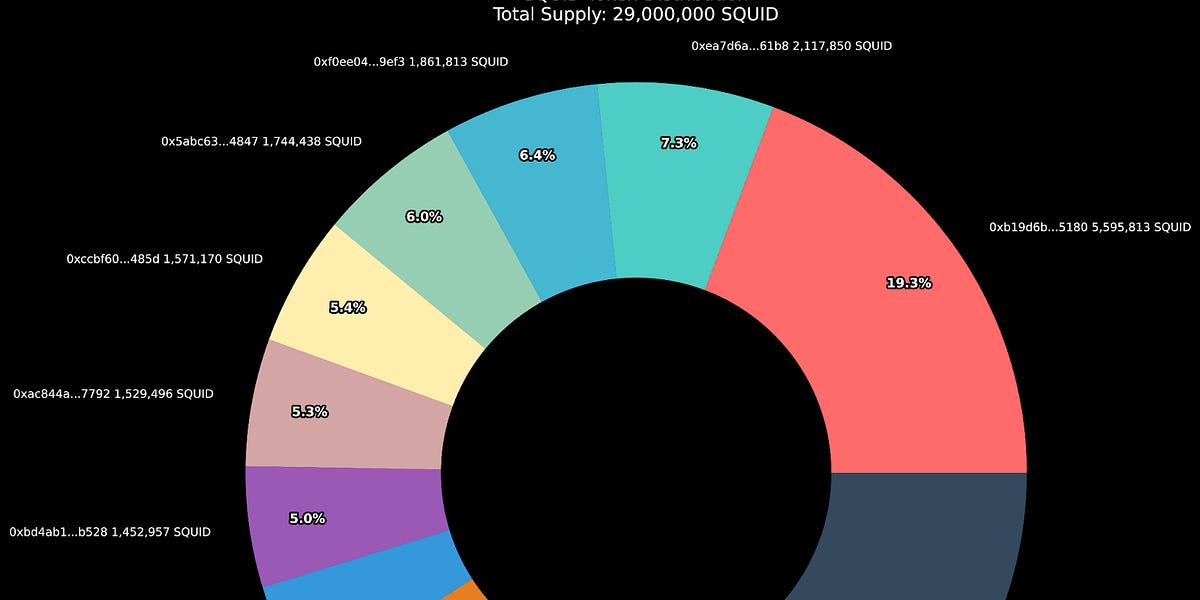
Leviathan News covers a new governance and emissions proposal for SQUID DAO called Project CUTTLE (Community Unified Token Treasury & Leviathan Emissions), which would give the DAO direct control over monthly token emissions via on-chain voting. The initiative is framed as an evolution of SQUID’s tokenomics and treasury management, aiming to align emissions, protocol growth, and community incentives under a more flexible, vote-driven framework. According to the proposal, Project CUTTLE introduces a mechanism where SQUID DAO tokenholders periodically decide how much of the protocol’s emissions are released and how they are allocated, rather than following a rigid, pre-set schedule. This is intended to let the DAO dynamically adjust incentives based on market conditions, treasury health, and strategic priorities, reflecting SQUID’s broader identity as a community-governed, crypto-native investment/treasury DAO that grew out of the Olympus-style reserve currency model. The CUTTLE framework also seeks to more tightly couple emissions decisions with the state and deployment of the DAO’s on-chain treasury, so that dilution, growth, and capital deployment are coordinated rather than treated as separate tracks. The story matters because it highlights how post-Olympus reserve-currency DAOs are experimenting with more sophisticated governance of emissions and treasuries, moving away from purely formulaic inflation toward explicitly governed “monetary policy.” For SQUID DAO, whose core value proposition is the management and growth of a sizable crypto treasury on behalf of tokenholders, the success or failure of Project CUTTLE will be an important test of whether actively governed emissions can improve capital efficiency, reduce wasteful dilution, and better align long-term holders, active participants, and protocol growth.

AI-generated background, compiled from web sources — not editorial content.

More coverage

Explore the topic

Loading related coverage…

Comments

Loading comments…