Summary of Pulsechain shenanigans
𝕏/@ercwl •
Revision history
8 recorded changes
Want your article here?
Promote with Leviathan News8 recorded changes
Want your article here?
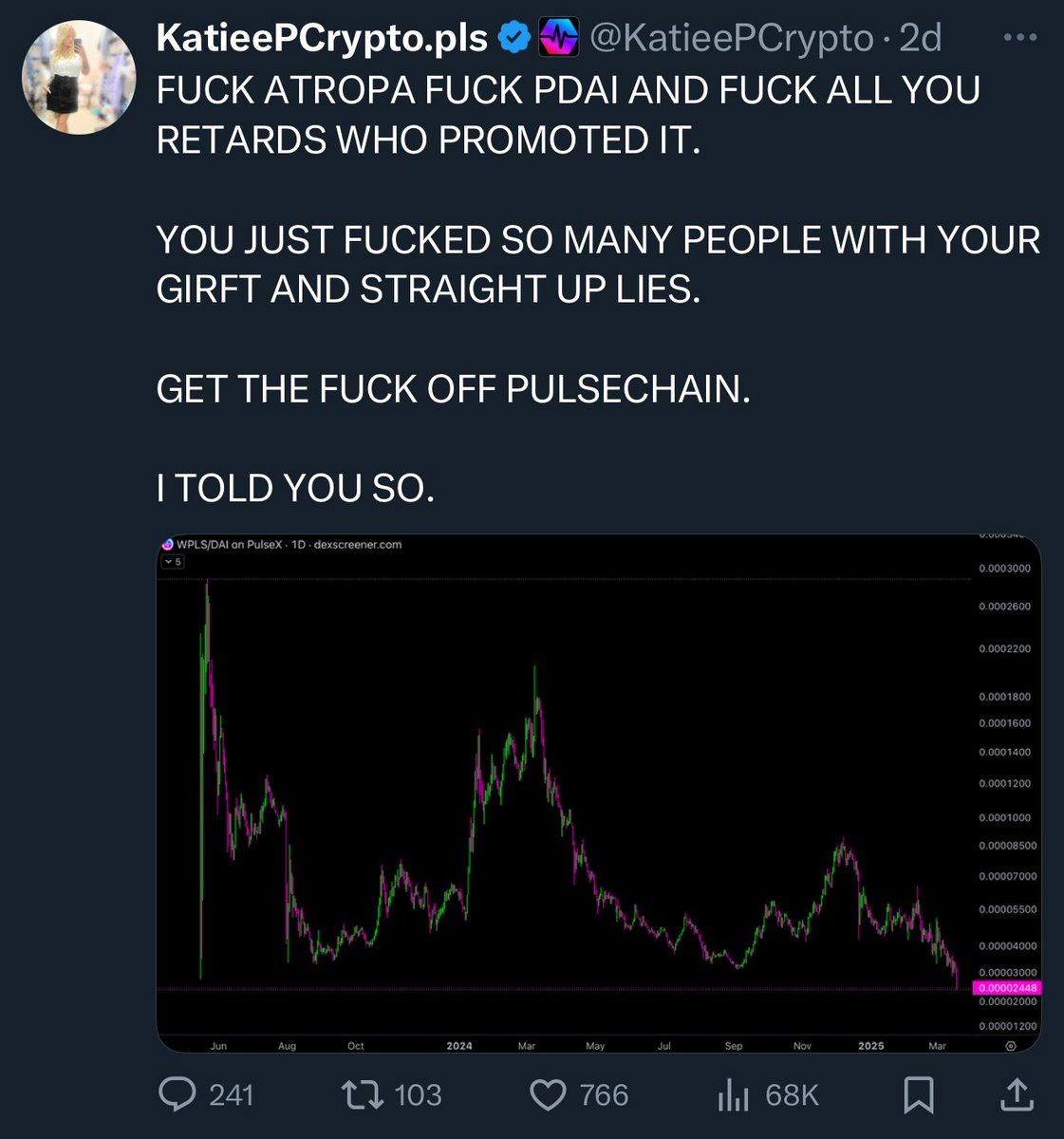
Promote with Leviathan NewsA widely shared thread by on-chain researcher ercwl (Eric Wall) lays out a detailed critique of the design and launch mechanics of PulseChain, the Ethereum fork founded by Richard Heart, also creator of HEX. PulseChain raised the equivalent of billions of dollars in crypto through a so‑called “sacrifice” phase, in which users sent assets to addresses with no contractual claim in return, framed as a political donation rather than an investment. According to earlier analyses, this sacrifice raised on the order of $13–14 billion at peak valuations, with a substantial portion coming from HEX and from the HEX “origin address,” concentrating control of the resulting PLS supply in a single opaque entity likely linked to Heart. Wall’s “shenanigans” summary focuses on how these mechanics translate into centralization and legal risk. Because PulseChain is a proof‑of‑stake style network in which large PLS holders can effectively control validator selection, the entity that received the lion’s share of sacrifice-linked PLS may be able to dominate governance and block production. The thread also highlights that the sacrifice framing and heavy promotional focus on outsized returns mirror patterns regulators associate with unregistered securities offerings and potential fraud, against the backdrop of earlier SEC scrutiny and enforcement relating to HEX and related products. For observers and market participants, the episode raises broader questions about retail fundraising models in crypto, the use of political-donation language to skirt securities law, and the risks of highly centralized token distributions on ostensibly decentralized networks.
AI-generated background, compiled from web sources — not editorial content.
Loading related coverage…
Loading comments…
🚀 Love DeFi? Ready to dive in and start earning $SQUID while making an impact?
Restoring your session before loading comments…
𝕏/@WhaleFUD ·

The Block ·
Twitter/@PeterMcCormack ·
𝕏/@WhaleFUD ·
The Block ·
Twitter/@PeterMcCormack ·