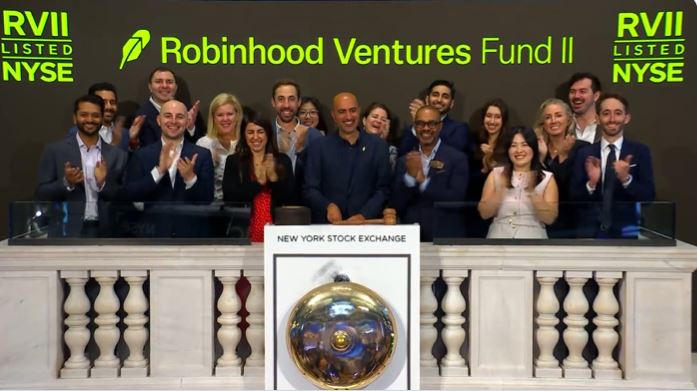
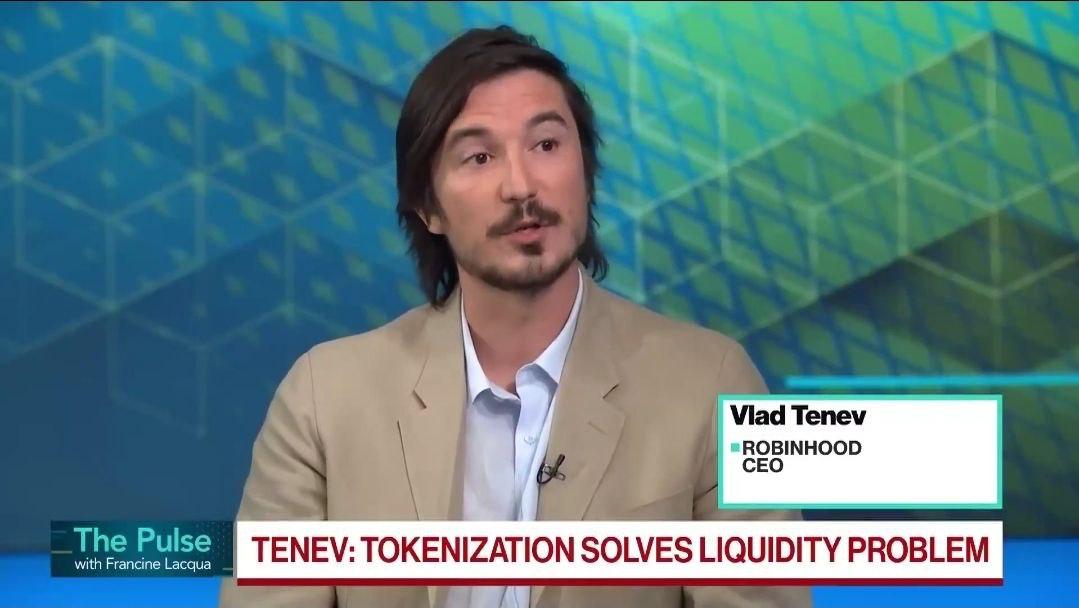
Bloomberg’s Odd Lots podcast hosted Robinhood CEO Vlad Tenev to discuss how the company aims to use blockchain to open up access to private-company equity and expand into large-scale prediction markets for retail traders. Tenev framed both tokenization and prediction markets as core to Robinhood’s long‑term strategy of giving individual investors access to instruments that historically have been limited to institutions and ultra-wealthy investors. On tokenization, Tenev reiterated Robinhood’s plan to create tokenized, equity‑linked instruments referencing shares of high‑profile private companies such as OpenAI and SpaceX, allowing smaller investors to gain exposure to names typically available only in late‑stage venture or secondary markets. Robinhood has already experimented in Europe with “stock tokens” and private‑company tokens distributed as non‑tradable gifts, and is working with regulators on a multi‑phase rollout (including a future "V2" and "phase three") that could ultimately enable trading once legal and compliance issues around private markets and issuer consent are addressed. Tenev has repeatedly described tokenization as a “freight train” or the start of a broader “tokenization supercycle,” arguing that moving assets onto blockchain rails will over time reshape trading, settlement, and investor access across the financial system. In parallel, Tenev highlighted Robinhood’s aggressive push into prediction markets, positioning them as a fast‑growing business line and a logical extension of the company’s focus on event‑driven, retail‑accessible trading products. He described an ambition to “allow markets in everything,” from one‑off real‑world events to more complex, derivative‑like payoff structures, while acknowledging the need to navigate evolving regulation around event markets and retail speculation. For the broader market, Robinhood’s strategy underscores how a mainstream, regulated brokerage is trying to integrate Web3‑style tokenization and prediction markets into its core offering, potentially normalizing these instruments for a large U.S. and international retail user base and putting pressure on regulators and competitors to clarify rules and respond.

AI-generated background, compiled from web sources — not editorial content.

More coverage

Explore the topic

More on Vlad Tenev

Comments