Tencent and Baidu maintain their edge in the global AI race by hoarding semiconductors, enhancing AI efficiency, and relying on locally made chips amid tightening U.S. export controls.
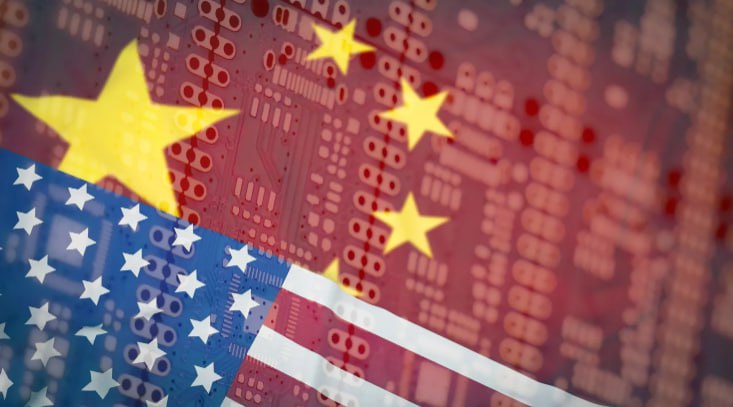
Tencent and Baidu maintain their edge in the global AI race by hoarding semiconductors, enhancing AI efficiency, and relying on locally made chips amid tightening U.S. export controls.
CNBC
Revision history

9 recorded changes

Want your article here?

Promote with Leviathan News

Chinese internet giants Tencent and Baidu are detailing how they are adapting to tightened U.S. export controls on advanced AI chips by stockpiling foreign semiconductors, aggressively improving model and data-center efficiency, and accelerating a shift toward domestically produced processors. According to the CNBC report, both companies have been using inventories of Nvidia’s high-end GPUs acquired before successive U.S. rounds of export curbs while re‑engineering their AI workloads so they can rely more on locally available or less advanced chips for training and inference. The backdrop is Washington’s escalating controls on exports of cutting-edge AI accelerators to China since 2022, aimed at limiting Chinese access to the most powerful U.S.-designed GPUs used to train large language models and other frontier systems. In response, major Chinese tech firms—including Tencent and Baidu—have poured investment into semiconductors and are now working to transition from Nvidia hardware to Chinese alternatives such as chips from Huawei and other domestic suppliers, while also exploring architectural changes (like model compression and more efficient parameterization) to stretch constrained compute. This matters because it illustrates how leading Chinese AI platforms are trying to maintain competitiveness in the global AI race despite constrained access to U.S. technology, and it highlights a broader structural shift toward greater AI and semiconductor self‑reliance in China that could reshape global supply chains and the balance of power in advanced computing.

AI-generated background, compiled from web sources — not editorial content.

More coverage

Explore the topic

More on AI

Comments