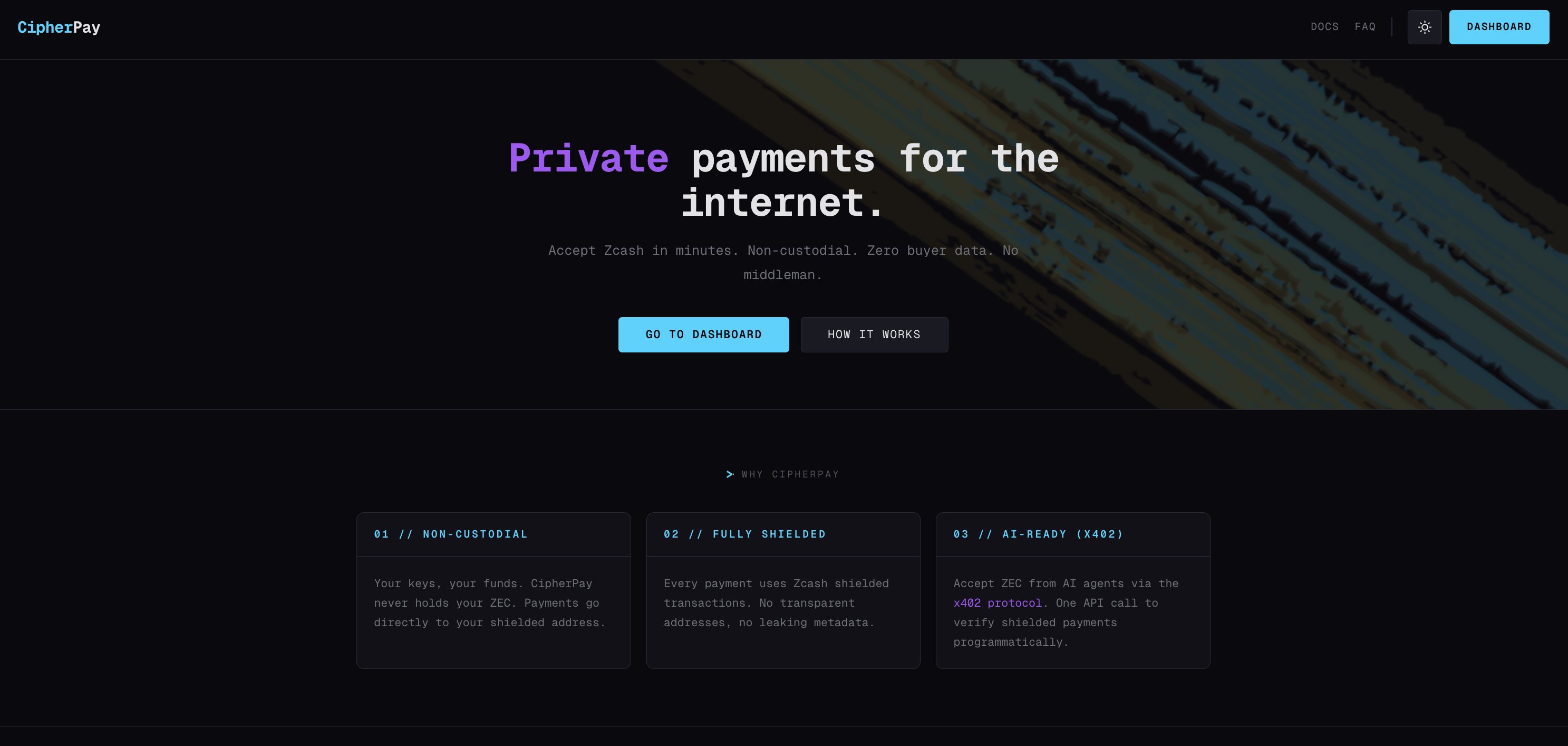
CipherPay has launched as a non‑custodial Zcash payment processor that lets merchants accept ZEC in online stores, websites, and applications while preserving user privacy. The service is live at cipherpay.app and is positioned as “private payment infrastructure for Zcash,” using Zcash’s shielded transactions so merchants can integrate ZEC without handling custody or collecting buyer data.
According to the project’s documentation and a retroactive grant application on the Zcash community forum, CipherPay allows merchants to connect via a viewing key (specifically an incoming viewing key for Zcash’s Orchard pool), enabling CipherPay to detect and notify about incoming payments in real time while funds go directly to the merchant’s own shielded wallet. The platform does not require merchants to run their own node, perform KYC, or use a hosted wallet, and it states that it never sees sender identities, spending keys, wallet balances, or buyer transaction histories, and does not share data with third parties. The stack is open source under permissive licenses (MIT for most components, GPLv2 where required, such as the WooCommerce plugin), with code written in Rust, TypeScript, and PHP to support various integrations including traditional ecommerce setups.
The launch is notable in the Zcash ecosystem because it targets a long‑standing gap: merchant tooling for shielded ZEC payments, including single payments, bulk payroll, and payables workflows on mainnet, with additional automation via AI-assisted “draft flows” that still require human wallet approval. By abstracting away node management and custody while preserving on‑chain privacy guarantees, CipherPay aims to make it easier for merchants and platforms to add ZEC as a payment option without relying on centralized processors that typically demand customer data and full account control.
✨ AI-generated background, compiled from web sources — not editorial content.