"Impermanent Loss and how yieldbasis makes it "zero" - Part I: A Simple Mathematica" - a new article by Mirador News
𝕏 •
Revision history
7 recorded changes
Want your article here?
Promote with Leviathan News7 recorded changes
Want your article here?
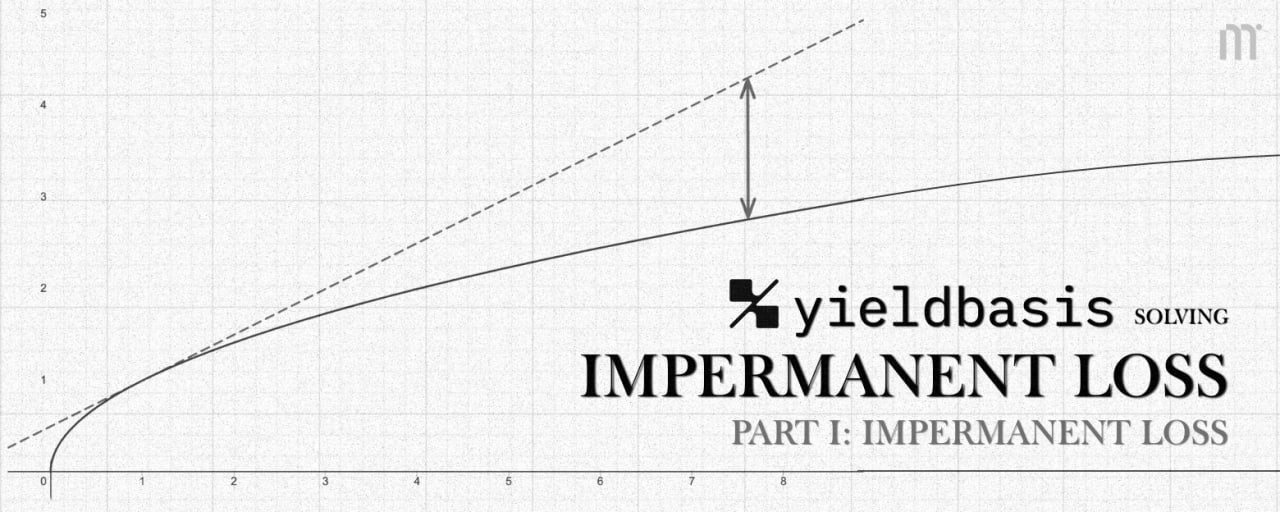
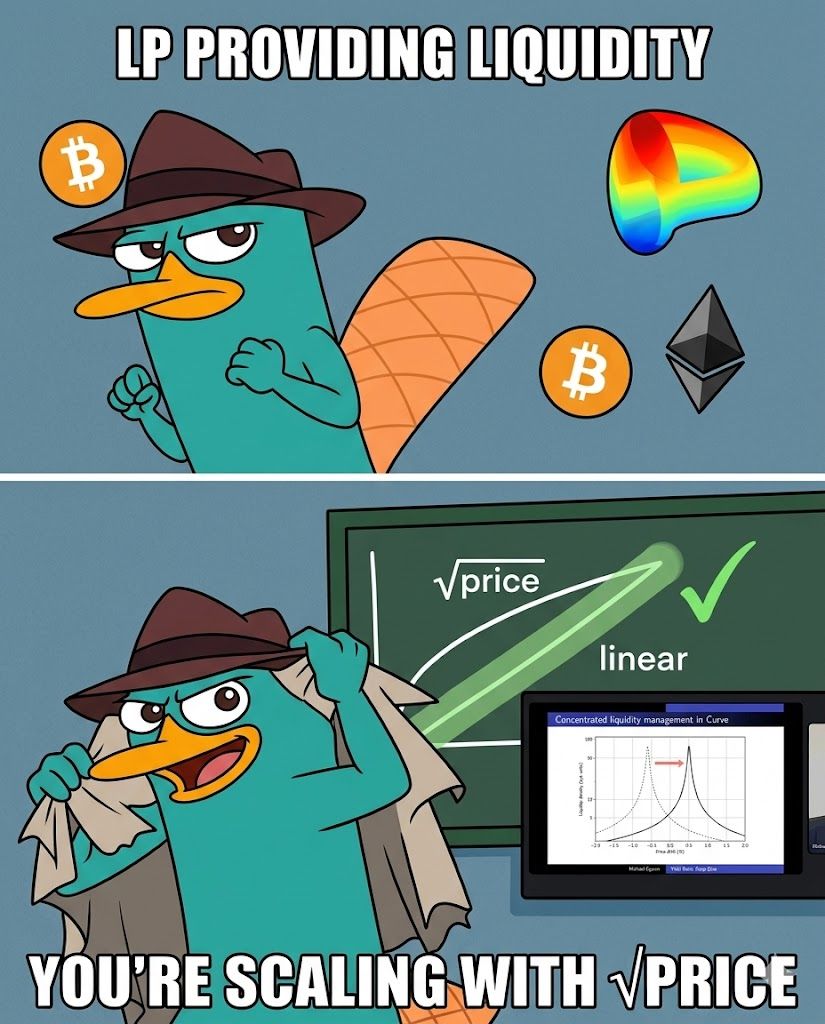
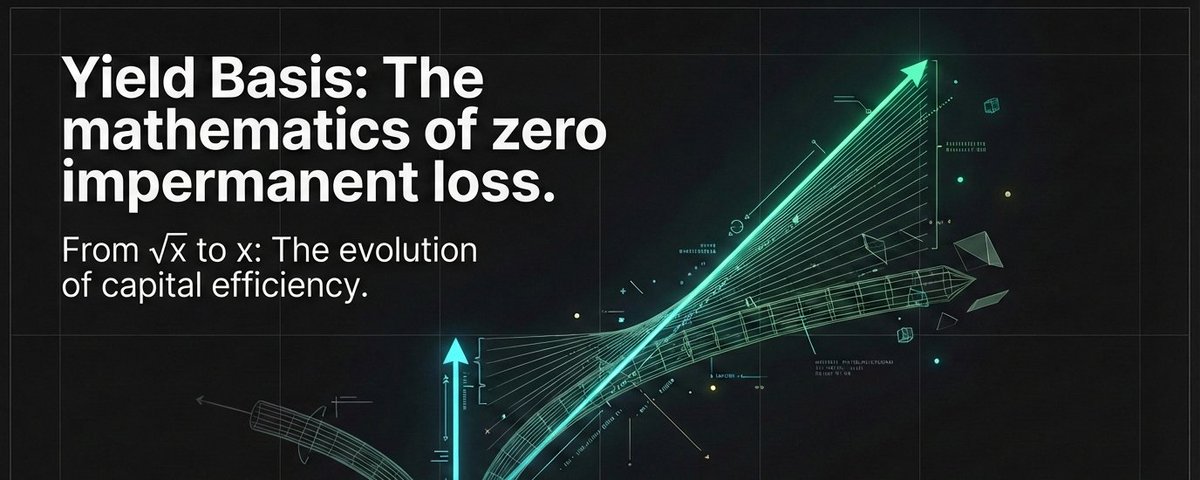
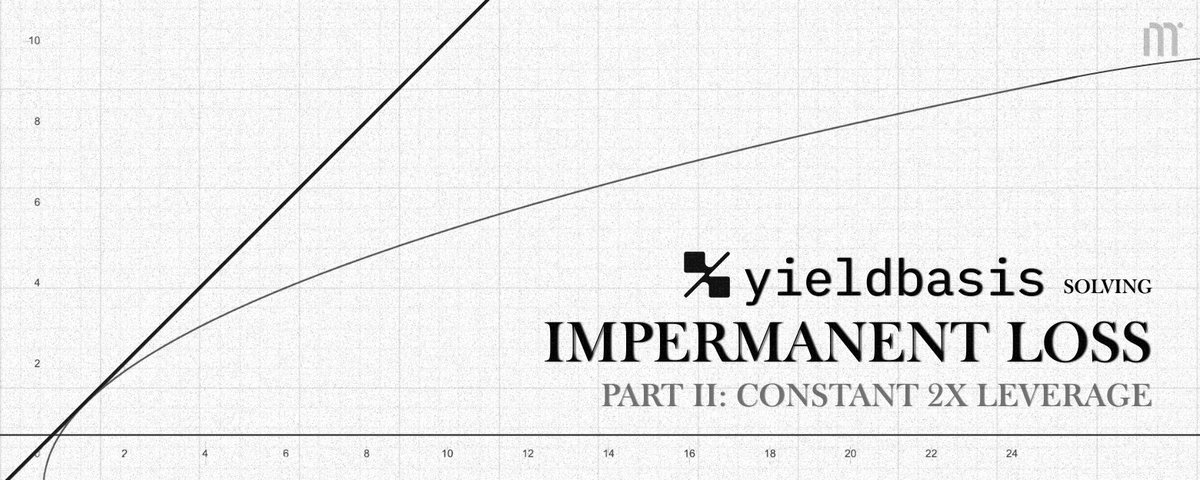
Promote with Leviathan NewsTL;DR: Impermanent loss (IL) isn’t a bug or bad timing—it’s a structural outcome of traditional AMMs (x·y = k). When prices move, AMMs auto-rebalance, causing LP positions to grow with √x while simply holding assets grows linearly, so LPs underperform HODL as volatility increases. Trading fees can sometimes offset IL in calm markets, but simulations show they often fail as price moves get larger. Yield Basis tackles IL at the root by maintaining a constant 2× leverage, effectively squaring the LP payoff and transforming returns from √x back to x. The result is LP exposure that tracks price 1:1 like holding the asset, while still earning trading fees. Part II will detail how Yield Basis sustains this leverage and rebalancing in practice.
Top comment by @Danicjade
Loading related coverage…
Loading comments…
🚀 Love DeFi? Ready to dive in and start earning $SQUID while making an impact?
Danicjade
TL;DR:
Impermanent loss (IL) isn’t a bug or bad timing—it’s a structural outcome of traditional AMMs (x·y = k). When prices move, AMMs auto-rebalance, causing LP positions to grow with √x while simply holding assets grows linearly, so LPs underperform HODL as volatility increases. Trading fees can sometimes offset IL in calm markets, but simulations show they often fail as price moves get larger. Yield Basis tackles IL at the root by maintaining a constant 2× leverage, effectively squaring the LP payoff and transforming returns from √x back to x. The result is LP exposure that tracks price 1:1 like holding the asset, while still earning trading fees. Part II will detail how Yield Basis sustains this leverage and rebalancing in practice.
𝕏/@DeFi_Perryy ·
𝕏/@hell0men ·
𝕏/@MiradorNews ·
𝕏/@yieldbasis ·
𝕏/@heswithme_eth ·

Youtube ·
𝕏/@DeFi_Perryy ·
𝕏/@hell0men ·
𝕏/@MiradorNews ·
𝕏/@yieldbasis ·
𝕏/@heswithme_eth ·
Youtube ·