FLASHBACK: The MEV attack at the center of today's DOJ indictment
𝕏/@blockworksres •
Revision history
6 recorded changes
Want your article here?
Promote with Leviathan News6 recorded changes
Want your article here?
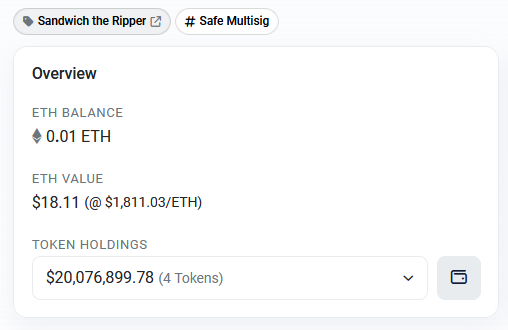
Promote with Leviathan NewsIn May 2024, the U.S. Department of Justice unsealed an indictment charging brothers Anton and James Peraire-Bueno with conspiracy to commit wire fraud, wire fraud, and conspiracy to commit money laundering over a sophisticated MEV-focused attack on the Ethereum blockchain that allegedly stole about $25 million in ETH in roughly 12 seconds. Prosecutors describe the scheme as a “novel” exploitation of Ethereum’s infrastructure that “attacked the integrity of the Ethereum blockchain” by abusing the Maximal Extractable Value (MEV) supply chain rather than traditional protocol-level bugs. The incident at the center of the indictment corresponds to an April 2023 attack that drained multiple MEV bots by corrupting the block-building process, an episode that was extensively analyzed in crypto circles at the time and is now being reframed in court as outright fraud. According to the indictment and subsequent analysis, the brothers allegedly set up Ethereum validators and exploited a vulnerability in the MEV-Boost relay protocol to see the contents of proposed blocks before committing to them, something the design is meant to prevent. By tricking the relay into revealing an MEV builder’s block payload, they could unbundle that block’s transactions, reassemble them into a new block that inserted their own front‑running transactions, and then propose this altered block to the network, siphoning funds from at least five MEV searcher bots. This case is significant because it is one of the first major U.S. enforcement actions to treat manipulation of the pre-chain / MEV infrastructure as criminal wire fraud rather than as merely aggressive trading, and the DOJ explicitly warns that tampering with widely relied‑upon protocols like MEV‑Boost poses systemic risks to Ethereum’s stability. The outcome of the case is being closely watched as a potential precedent for how regulators and courts will distinguish between permissible MEV strategies and prosecutable exploitation of blockchain infrastructure.
AI-generated background, compiled from web sources — not editorial content.
𝕏/@DefimonAlerts ·

𝕏/@1inch ·

𝕏/@solana ·
𝕏/@PeckShieldAlert ·
𝕏/@MetaMask ·
𝕏/@blocmates ·
𝕏/@DefimonAlerts ·
𝕏/@1inch ·
𝕏/@solana ·
𝕏/@PeckShieldAlert ·
𝕏/@MetaMask ·
𝕏/@blocmates ·
🚀 Love DeFi? Ready to dive in and start earning $SQUID while making an impact?