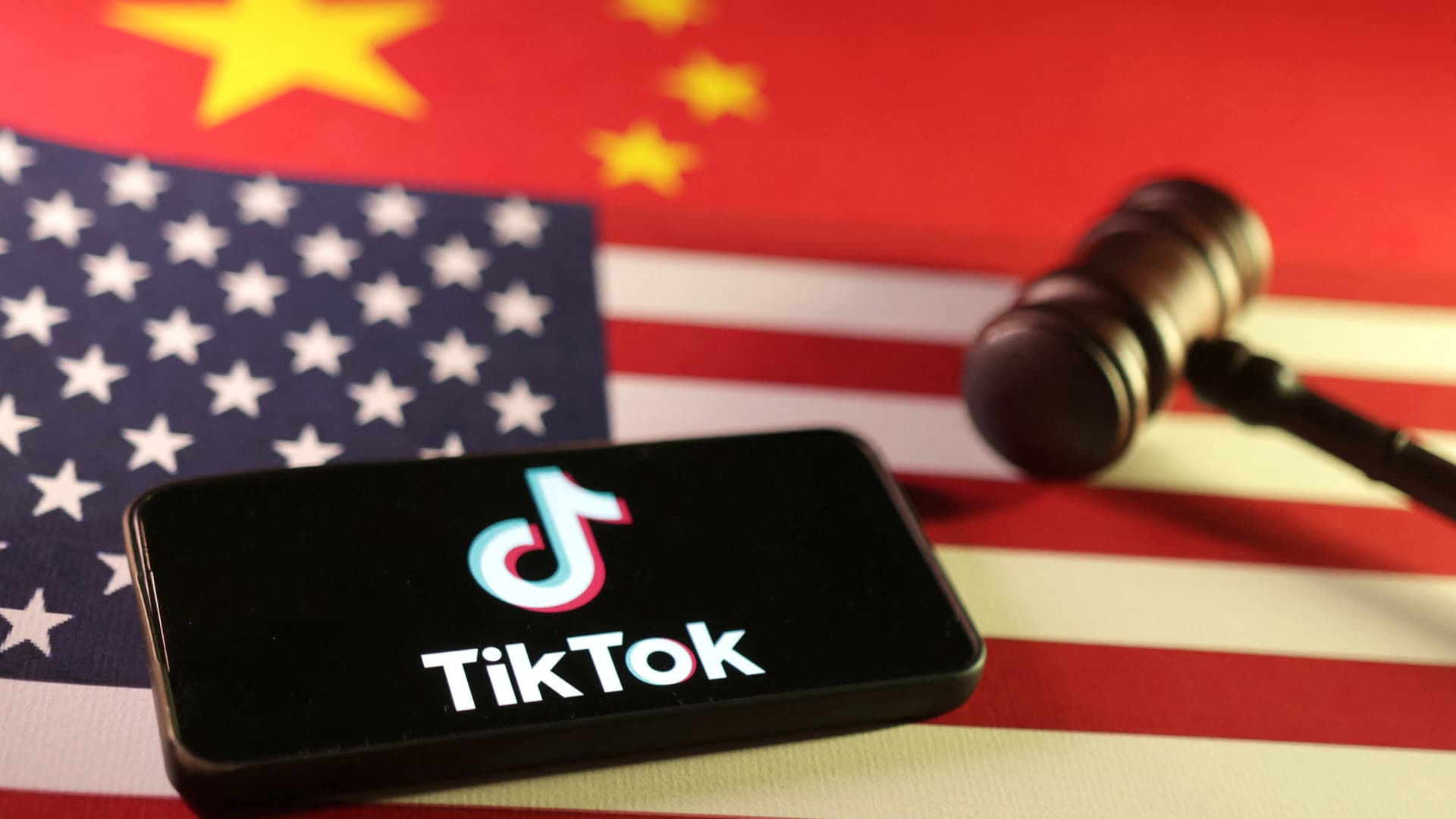
Supreme Court upholds TikTok ban, giving ByteDance until Sunday to divest or face shutdown in the U.S.
CNBC •
Revision history
4 recorded changes
Want your article here?
Promote with Leviathan News4 recorded changes
Want your article here?
Promote with Leviathan NewsThe U.S. Supreme Court has unanimously upheld a federal law that will effectively ban TikTok in the United States unless its China-based parent company ByteDance sells the U.S. version of the app to an approved, non–“foreign adversary controlled” owner by the legal deadline, which falls on Sunday. The ruling affirms a previous D.C. Circuit decision and allows the Protecting Americans from Foreign Adversary Controlled Applications Act to take full effect, giving ByteDance only days to finalize a divestiture or see TikTok cut off from key distribution and hosting services in the U.S. The law does not instantly erase TikTok from existing users’ phones, but it prohibits U.S. companies such as Apple and Google from offering TikTok in their app stores, and bars U.S. internet infrastructure and hosting providers from supporting the app, unless TikTok is severed from Chinese control. Over time, the lack of new downloads and updates would render the platform effectively inoperable in the U.S. market, affecting TikTok’s roughly 170 million American users, including creators, businesses, and political actors who rely on the app for communication and commerce. The Court accepted the government’s argument that national-security risks tied to Chinese data access and potential influence operations justify the speech burdens imposed by the law, rejecting First Amendment challenges raised by TikTok, ByteDance, and civil liberties groups. The decision represents a landmark in U.S. tech and national-security policy because it is the first time a major, widely used social media platform faces a nationwide shutdown absent a change in ownership. It intensifies pressure on ByteDance to complete a sale under tight political and regulatory scrutiny, while also setting a precedent for how the U.S. may regulate other foreign-owned digital platforms considered security risks. The case will continue to shape debates over the limits of government power to restrict online speech in the name of national security, the rights of users and creators on large platforms, and the broader trajectory of U.S.–China technology and data governance conflicts. "entities":["TikTok","ByteDance","TikTok Inc.","U.S. Supreme Court","Protecting Americans from Foreign Adversary Controlled Applications Act","U.S. Department of Justice","Apple","Google","ACLU (American Civil Liberties Union)","United States Court of Appeals for the D.C. Circuit","Garland (U.S. Attorney General)","Chinese government","U.S. Congress"]}`
AI-generated background, compiled from web sources — not editorial content.
WSJ ·
crypto.news ·
Axios ·

Axios ·
CNBC ·
archive.ph ·
WSJ ·
crypto.news ·
Axios ·
Axios ·
CNBC ·
archive.ph ·
🚀 Love DeFi? Ready to dive in and start earning $SQUID while making an impact?