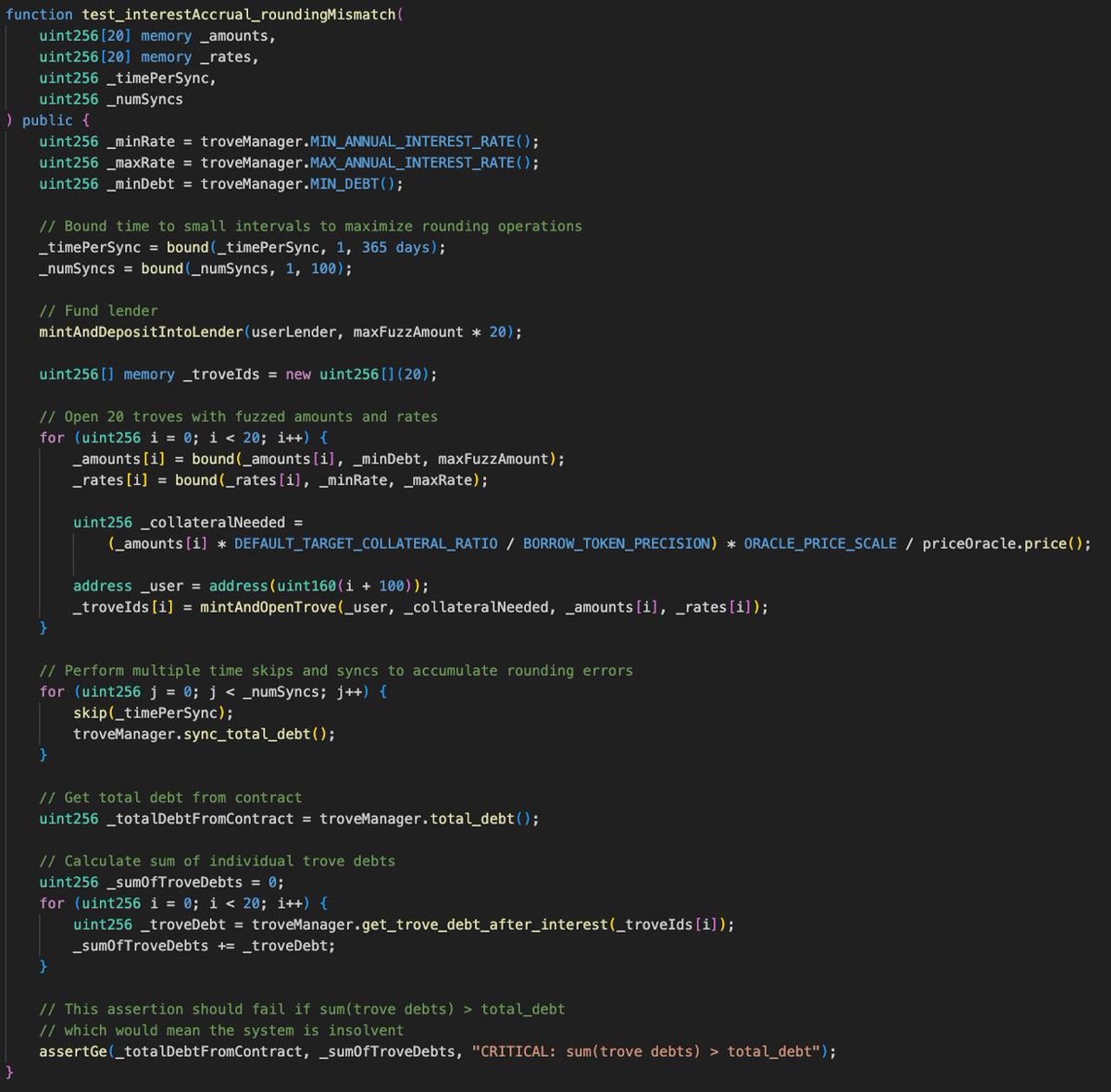
Claude oneshots a successful fuzz test in Foundry
𝕏/@johnnyonline_ •
Revision history
5 recorded changes
Want your article here?
Promote with Leviathan News5 recorded changes
Want your article here?
Promote with Leviathan NewsDeveloper and content creator johnnyonline shared a short demo showing Anthropic’s Claude large language model successfully writing a Foundry fuzz test that passed on the first run (“one‑shot”), highlighting a practical coding use case for AI in Ethereum smart contract testing. In the post, he prompts Claude to generate a fuzz test for a Solidity contract using the Foundry framework; the model produces the test code, which he then runs with forge test, confirming that the fuzzing setup compiles and executes successfully without needing manual fixes. The significance of the clip is less about a novel testing technique and more about showcasing how AI assistants can now reliably generate non‑trivial smart contract tests, including Foundry‑style fuzz tests that require correct imports, inheritance from Test/StdInvariant, and proper usage of fuzz inputs and assertions. Fuzzing in Foundry automatically supplies large ranges of randomized inputs to test functions, helping developers uncover edge cases and logic bugs beyond standard unit tests; being able to have an AI agent draft such tests correctly on the first attempt suggests a growing role for LLMs in security‑oriented Ethereum development workflows. For smart contract teams, this points to AI as a productivity tool for rapidly scaffolding fuzz and invariant tests that can then be refined by human reviewers.
AI-generated background, compiled from web sources — not editorial content.

Coindesk ·
𝕏/@0xB10C ·

Businesswire ·

𝕏/@johnnyonline_ ·
𝕏/@wavey0x ·
The Block ·
Coindesk ·
𝕏/@0xB10C ·
Businesswire ·
𝕏/@johnnyonline_ ·
𝕏/@wavey0x ·
The Block ·
🚀 Love DeFi? Ready to dive in and start earning $SQUID while making an impact?