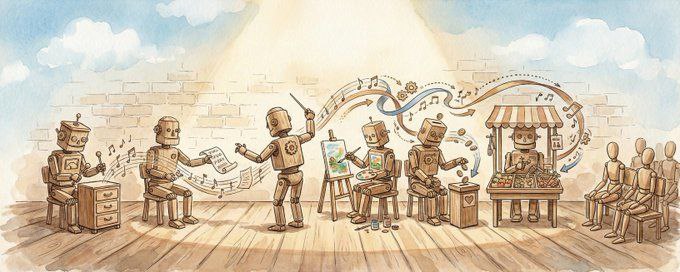
A recent discussion in the AI‑agent developer community argues that emerging agent protocols such as MCP, A2A, AG‑UI, A2UI, AP2, and UCP are not rival standards but complementary layers in a common “agent protocol stack.” Rather than competing, each protocol addresses a distinct concern—data and tools, agent‑to‑agent coordination, commerce, payments, and UI/UX—allowing developers to compose scalable, modular AI agents by combining only the layers they need.
According to Google’s developer guide and several independent technical breakdowns, Model Context Protocol (MCP) standardizes how agents connect to external tools and data sources, so a single agent can discover and use multiple MCP servers without custom integrations. Agent2Agent (A2A) then lets agents running on different frameworks discover each other and collaborate via standardized “agent cards,” effectively forming multi‑agent systems that can delegate tasks across services. On top of that, Universal Commerce Protocol (UCP) provides a shared schema for shopping and ordering workflows across merchants, while Agent Payments Protocol (AP2) adds payment authorization and guardrails (mandates, limits, auditability) as a trust and compliance layer for those commerce flows.
The UX side is handled separately: A2UI defines how an agent can return structured UI components—cards, tables, dashboards—rather than raw text, while AG‑UI (or AGUI) specifies how those components are streamed and synchronized with user-facing applications in real time. Architectural overviews emphasize that these protocols are intentionally scoped so they can be stacked: MCP for tools and data, A2A for coordination, UCP+AP2 for commerce and payments, and A2UI+AG‑UI for interactive UI, all riding on conventional transports like HTTP. This layered view matters because it reduces vendor lock‑in, improves interoperability between agent platforms, and gives AI builders a clearer roadmap for assembling production‑grade “agent development kits” using open, composable standards.
✨ AI-generated background, compiled from web sources — not editorial content.