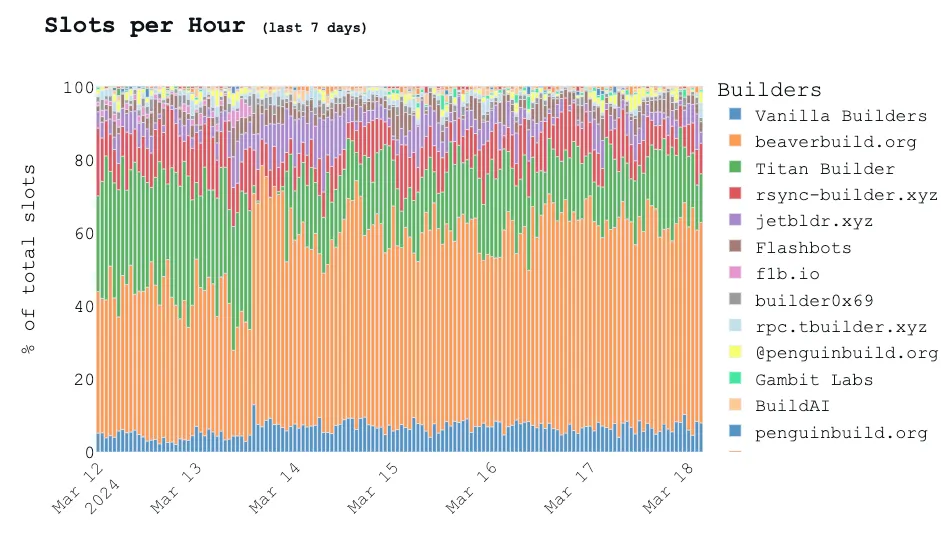
The biggest beneficiary of Ethereum's Dencun upgrade may well be beaverbuild, which now boasts the majority of block builder slots
mevboost.pics •
Revision history
3 recorded changes
Want your article here?
Promote with Leviathan News3 recorded changes
Want your article here?
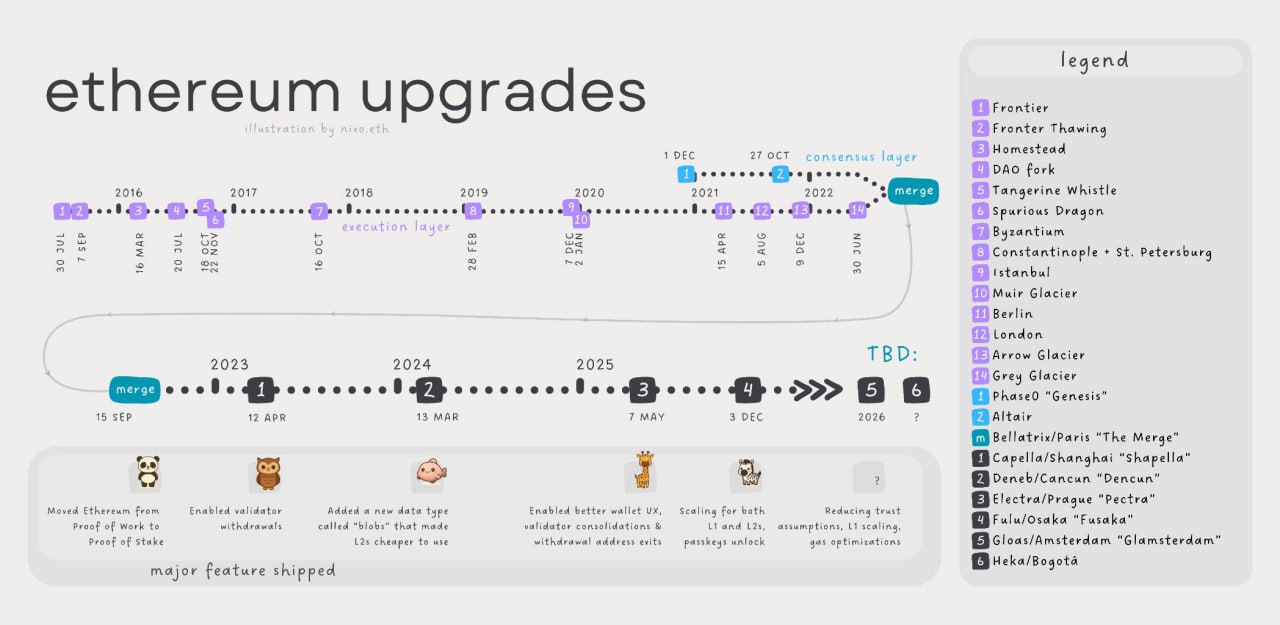
Promote with Leviathan NewsAfter Ethereum’s Dencun upgrade went live in March 2024, the network’s transaction structure and economics for rollups changed, with proto‑danksharding (EIP‑4844) introducing cheap “blob” space for data and generally increasing block space utilization. In this new environment, competition in Ethereum’s proposer-builder separation (PBS) market has intensified, and data from mevboost.pics shows that beaverbuild, a permissionless MEV-Boost block builder, has emerged as the leading builder by share of accepted blocks/slots on mainnet in the post‑Dencun period. The site’s live and historical dashboards indicate that beaverbuild now consistently accounts for the largest portion of builder-delivered blocks to validators among major competitors, often holding a clear plurality or majority of builder market share in recent epochs. This shift matters because block builders sit at a critical point in Ethereum’s MEV (maximal extractable value) supply chain, deciding how to order transactions and how aggressively to arbitrage, backrun, or capture MEV opportunities. With Dencun making blocks more data-rich and rollup activity cheaper, the absolute opportunity set for MEV and sophisticated orderflow strategies has grown, amplifying the economic importance of dominant builders. A builder such as beaverbuild gaining majority share can improve efficiency and payouts for validators who connect to it, but it also raises decentralization and resilience questions: concentration of block building power could affect censorship resistance, competition, and the robustness of PBS if a small number of builders control most profitable blocks. This development is therefore being watched closely by researchers and infrastructure providers as part of the broader assessment of how Dencun is reshaping Ethereum’s execution, fee markets, and MEV landscape.
AI-generated background, compiled from web sources — not editorial content.

𝕏/@renaissancing_ ·
Coindesk ·

Cryptonews ·

Cryptonews ·

youtu.be ·
ethereum.org ·
𝕏/@renaissancing_ ·
Coindesk ·
Cryptonews ·
Cryptonews ·
youtu.be ·
ethereum.org ·
🚀 Love DeFi? Ready to dive in and start earning $SQUID while making an impact?